

Tulip bulbs were introduced to the Netherlands by botanist Carolus Clusius, and their beauty made them highly desirable.

Tulips first appeared in Western Europe during the second half of the 16th century, having originated from the Ottoman Empire. The tulip, with its intense petal colour, was different from every other flower known to Europe at that time. The bulbs were introduced to the Netherlands by the botanist Carolus Clusius of Leiden University, and because of their beauty and rarity they rapidly became highly desirable. Because of the East Indies trade and the development of various industries, the Netherlands was the richest European nation by the early 17th century.
The city-dwelling merchants, professionals and artisans aimed to display their new found wealth by the purchase of luxury goods such as tableware and paintings. The very rich obtained grand estates surrounded by flower gardens in which the tulip had pride of place. Collecting the bulbs that were likely to produce spectacular multicoloured flowers became, for some, an obsession.
Tulip mania reached its peak during the winter of 1636–37. In February 1637, tulip bulb contract prices collapsed abruptly and the trade in tulips ground to a halt. The financial effects of the collapse are still a subject of debate but certainly the many failures to honour a contract of payment sullied the reputations of those who had formerly been pillars of their communities. Opprobrium was heaped upon those involved in the tulip bulb trade by religious authorities and the writers and illustrators of satires.
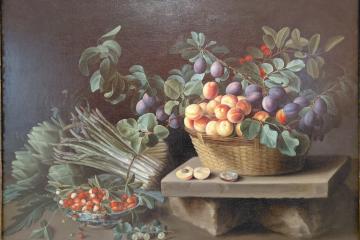
Yet, in spite of this, the tulip remained very popular and flower painters continued to present the flower prominently along with other and newer varieties of plants. The high quality of Dutch flower painting continued into the early 18th century with Jan van Huysum who had a European-wide reputation for his superabundant and flamboyant compositions.
How to book this event:
Visitors' tickets are £10.00 per person and are available via the Campus West website at www.campuswest.co.uk
THE ARTS SOCIETY ACCREDITED LECTURER

Mr Martin Heard
After studying History of Art at Manchester University I spent three years in the editorial department of a fine art publishing company. My later career took a detour into the world of information technology, during which time I had the opportunity to live and work for several years in both continental Europe and North America. Having 'retired' from this field of endeavour I now devote my time to researching mainly: English and French eighteenth, and late nineteenth century art and architecture; and European garden history from the medieval period to that of the great landscape gardeners, Capability Brown and Humphry Repton.
OTHER EVENTS
Society
Ms Isabelle Kent
18 Mar 2026 - 10:30
The Hawthorne Theatre
Campus West
Campus West
Online Event
This lecture explores the Spanish siglo d'oro - which saw a flourishing of painting, sculpture, literature and music
Society
Mr Mark Meredith
15 Apr 2026 - 10:30
The Hawthorne Theatre
Campus West
Campus West
Online Event
At the height of America's Gilded Age, some 450 heiresses gained European titles, restoring ancestral piles with American dollars