
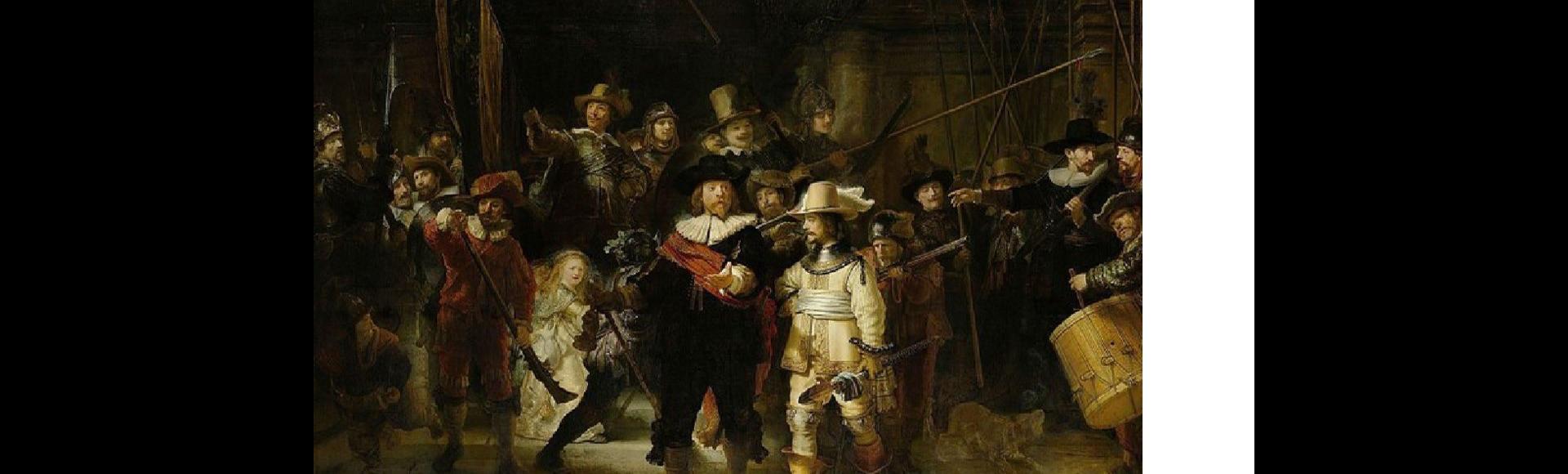
Rembrandt's ‘Night Watch’ is the artist’s greatest painting and the most famous in the Netherlands. But why is it so special?

The Night Watch' of 1642 is Rembrandt's greatest painting and the most famous painting in the Netherlands. But why is it so special? It has become an icon of the Golden Age and of the modern Dutch nation. Why? How was it commissioned and constructed? How did Rembrandt paint it and where has it been hung throughout its life? Who are the characters represented? Why is there a lone woman and what is meant by the dead chicken trussed up in her waistband? What does this all tell us about changing Dutch society?
This work redirected how group portraits were conceived. The traditional Dutch 'schutterstuk', a military group or shooting piece, became majestic and grandiose in Rembrandt's hands. 'The Night Watch' has had a chequered history physically: it was hidden in a cave in Maastricht in 1942, attacked with a knife in 1911 and 1975, then sprayed with acid in 1990. So, how has it survived as a masterpiece?
How to book this event:
Visitors' tickets (£10 or £5 for members of other Arts Societies with proof of membership) are available on the door or through the venue’s online booking system. https://www.campuswest.co.uk
Hilary Williams
Hilary was formerly a curator and print room Superintendent at the British Museum, and is now an Art History Education Officer in the Department of Learning & National Partnerships at the Museum. She lectures for the British Museum and Wallace Collection and was the Founding Artistic Director of The Arts Society of North Kent. She is a specialist in 17th century art and has published books on Rembrandt. Hilary has a vast experience of giving gallery talks, lecturing and leading art history tours in UK, Europe, New York and Boston. For the Royal Collection Trust, she has guided Special Interest Private Tours of the State Apartments at Buckingham Palace.
OTHER EVENTS
Society
Marie Conte-Helm
3 Nov 2026 - 10:45
The Focolare Centre for Unity
69 Parkway
69 Parkway
Online Event
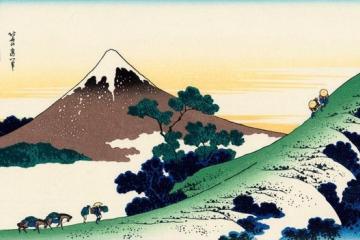
The development of the Japanese aesthetic in painting, sculpture and applied arts. The impact of Zen Buddhism on Japanese culture
Society
Sarah Ciacci
18 Nov 2026 - 10:30
The Hawthorne Theatre
Campus West
Campus West
Online Event
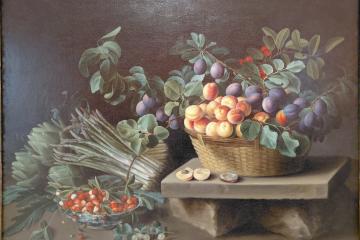
In this talk, Sarah will look at how food and feasting is depicted in paintings