
A three-lecture special interest day on Baroque Rome, where art, architecture, and history collide.
Lecture One: The Sacks of Rome from the 4th century BCE to 1527
The 1527 Sack of Rome by the troops of Charles V abruptly ended the High Renaissance, causing a major artistic diaspora that spread across Europe.
As artists fled ruined patronage, the city's culture shifted from optimistic classical harmony to chaotic, emotional and religious artistic styles, heavily influencing art and intellectual life for decades.
Lecture Two: Baroque Rome
Seventeeth Century Rome was an extraordinarily productive centre for the arts. Emerging from the trauma of the Sack of Rome (1527), the papacy and city determined to create a beacon of creativity and splendour to prove to the world that The Roman Church was the best and most desirable. Successive popes, embassies and princes poured their wealth into building and decorating new churches and palaces with the result that artists flocked to the city. This lecture discusses what emerged, and who were the prime movers in these original and exciting times.
Lecture Three: Caravaggio - Baroque 'n'roll
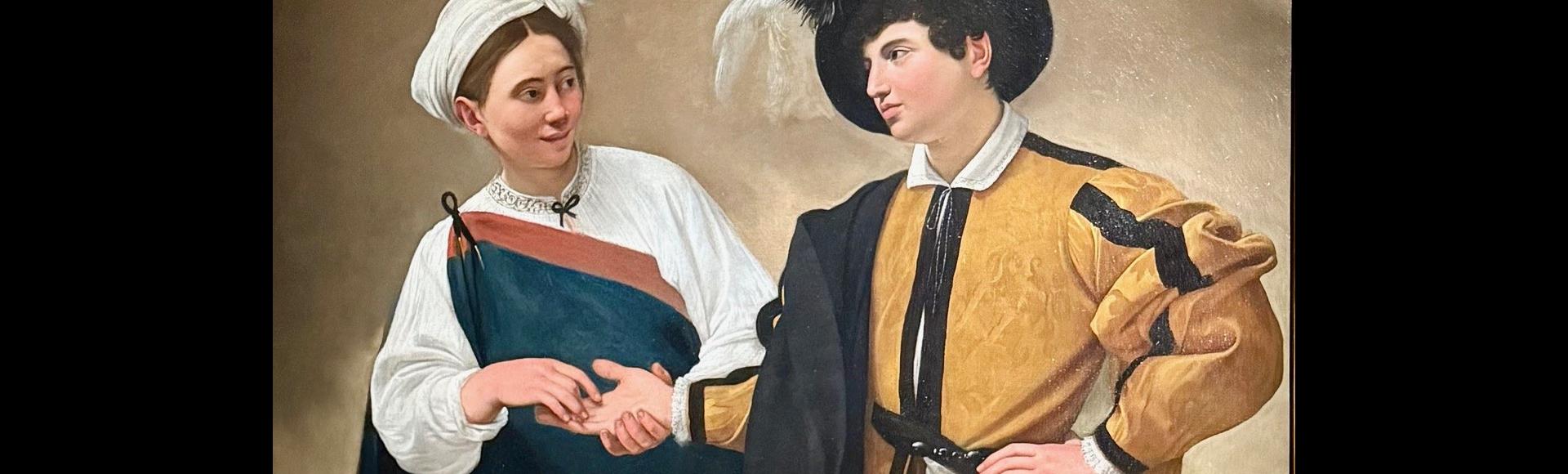
Michelangelo Merisi travelled to Rome from the village of Caravaggio, just outside Milan. He arrived at the tail end of the sixteenth century and was soon taken on by the painter Giuseppe Cesari, otherwise known as the Cavaliere d'Arpino, who was one of the papal favourites. He found himself employed painting flowers and fruits and rapidly developed a luscious style that combined the 'tenebrist' drama of artists such as Tintoretto or Luca Cambiaso with the meticulous accuracy and observational skills of the Flemish artists. His work was spotted by a highly influential man, the Florentine Cardinal Francesco Del Monte, and his career took off.