
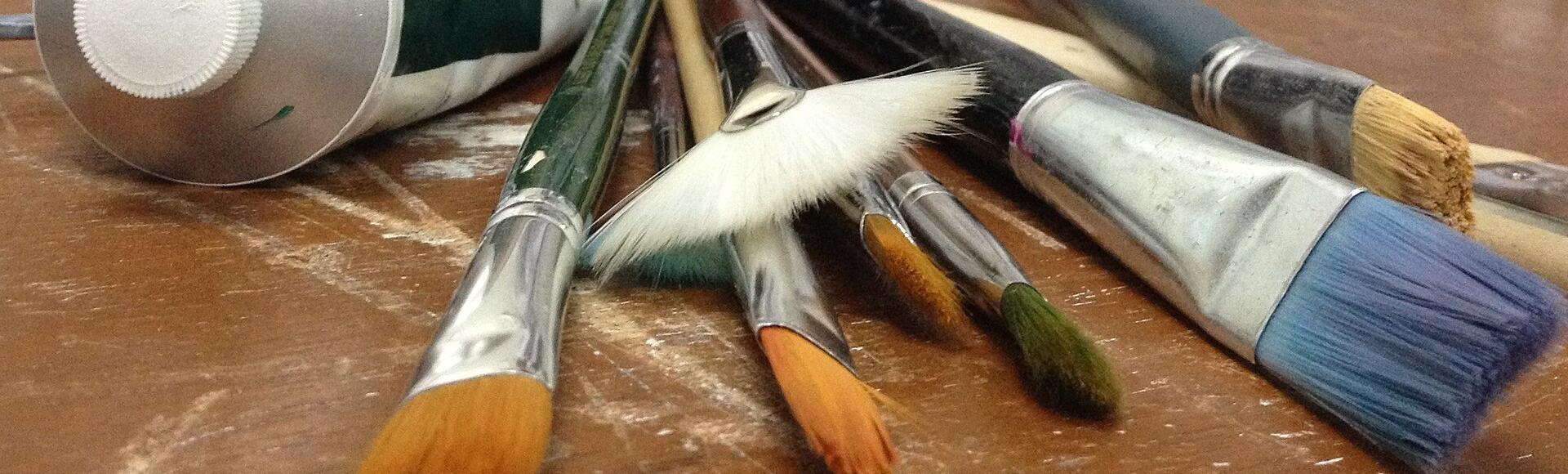
An understanding of some of the surprising materials which any artist had to master before they could begin to paint.

The 14th century artist Cennino Cennini recommended using “the chicken bones that you will find under the dining table” for making charcoaled bone black to paint with. His treatise, The Artists’ handbook, gives us an understanding of some of the surprising materials which any artist had to master before he could begin to paint, such as the tail of a squirrel to make his paintbrushes. But many of these materials were difficult to use and have an effect on the finished look of paintings from the centuries before industrial processes changed the artist’s world. This lecture will explain the techniques and the reasons for some of the features of 15th and 16th century paintings which may seem odd to our modern eyes. I will bring examples of the materials mentioned in the talk to pass round and discuss with participants. This could be a study day, combined with an extended study and display of technical aspects of the painter’s trade, and discussion of the effects that time, accidental and intentional damage can have had on paintings.
How to book this event:
All Arts Society Wensum members registered for Assembly Rooms lectures are welcome to attend this event without booking.
Arts Society accredited Lecturer: Chantel Brotherton-Ratcliffe
MA in History of Art from Edinburgh, PhD from the Warburg Institute, London University. With 40 years' experience as a lecturer, Chantal has taught at Sotheby's Institute of Art on the MA in Fine and Decorative Arts since 1989, and as a freelance lecturer for a number of societies and institutions in London, including the National Gallery and the Wallace Collection. Having also trained as a paintings conservator, she brings an understanding of the making and the physical painting to her lectures and study sessions.
OTHER EVENTS
Society
Arts Society accredited Lecturer: Rupert Dickens
18 Nov 2026 - 11:00
Online Event
Some of the most iconic images of the 20th century were created, not for galleries or private patrons, but for record sleeves.
Society
Arts Society accredited Lecturer: Rupert Dickens
18 Nov 2026 - 14:30
Town Close Auditorium, Norwich Castle, 21-23 Castle Meadow,
Online Event
Some of the most iconic images of the 20th century were created, not for galleries or private patrons, but for record sleeves.