
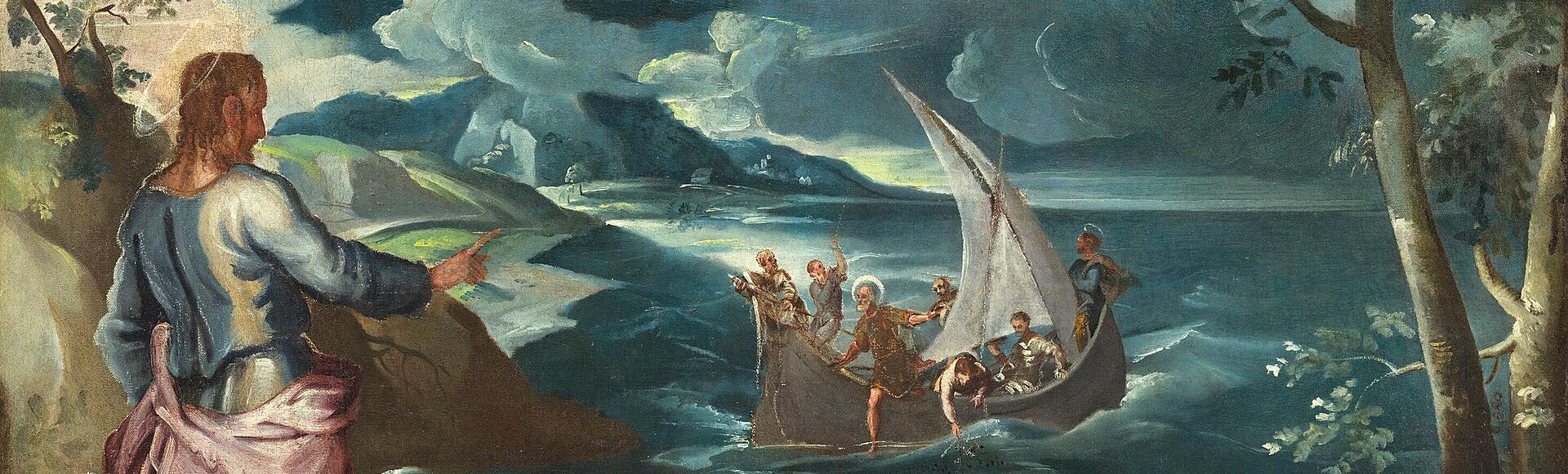
16th century Venetian Tintoretto painted so quickly that he was nicknamed ‘Il Furioso’ (“The Furious”) by his contemporaries.

In sixteenth-century Venice, Tintoretto, helped by his studio assistants, produced work so quickly that he was nicknamed ‘Il Furioso’ (“The Furious”) by his contemporaries. He had received almost no formal training. Without the benefit of an apprenticeship in the studio of a major artist he had to find work the hard way: by under-cutting prices and delivering faster than his competitors (who included Titian and Veronese). The scourge of the Venetian art market, Tintoretto would obtain commissions by either working for no fee or charging only for the cost of materials. His work, characterised by muscular figures, dramatic gestures and movement takes the art of the Mannerist period into the excitement of the Baroque. By the end of his life, he was working for the wealthiest in Venice and for international patrons. Yet he never forgot his roots and the poorer churches and scuole which had supported him in his early days. What might have driven his ambition, and why might he have given so much of his work away?
How to book this event:
All Arts Society Wensum members registered for Assembly Rooms lectures are welcome to attend this event without booking.
Arts Society accredited Lecturer: Julia Musgrave
Julia Musgrave got her first degree in Chemical Engineering and went on to become a Chartered Information Systems Engineer and IT project manager. In 2008 she decided that life was too short for just one career and decided to become an art historian. She now has a Graduate Diploma in the History of Art from the Courtauld Institute of Art and an MLitt in ‘Art, Style and Design: Renaissance to Modernism, c.1450 – c.1930’ from the University of Glasgow. She gained her PhD at the University of York for her research into the involvement of the Bloomsbury Group and the social networks of the British art world in the development of the Contemporary Art Society from 1910 to 1939. She teaches Art History at the City Literary Institute (City Lit) and the Highgate Literary and Scientific Institution (HLSI) in London.
OTHER EVENTS
Society
Arts Society accredited Lecturer: Rupert Dickens
18 Nov 2026 - 11:00
Online Event
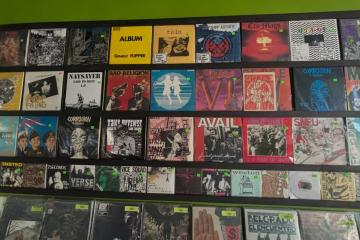
Some of the most iconic images of the 20th century were created, not for galleries or private patrons, but for record sleeves.
Society
Arts Society accredited Lecturer: Rupert Dickens
18 Nov 2026 - 14:30
Town Close Auditorium, Norwich Castle, 21-23 Castle Meadow,
Online Event
Some of the most iconic images of the 20th century were created, not for galleries or private patrons, but for record sleeves.