

Exploring the visual and literary uses of the clock and the varied meanings it could hold throughout the ages

Few people nowadays give more than a second thought to their clocks: practical, sometimes beautiful, devices that form the background noise of our daily lives. But from their introduction in the thirteenth century onwards, clocks have held a variety of philosophical and social meanings. This talk explores the visual and literary uses of the clock, the varied meanings it could hold throughout the ages: as an ominous symbol of oncoming death, but also as a metaphor for the soul, for capitalism, and for the good use of time
How to book this event:
All Arts Society Wensum members are welcome to attend this event without booking.
Dr Christina Faraday
Dr Christina Faraday, FRHistS, is a historian of art and ideas, specialising in Tudor and Stuart Britain and the wider 16th and 17th-century world. She is a Research Fellow in History of Art at Gonville and Caius College, Cambridge, a Trustee of the Walpole Society for British art history, and a BBC New Generation Thinker, appearing regularly on BBC Radio 3 and in other popular media. She is an experienced lecturer, and teaches for the History of Art Department at the University of Cambridge, The Wallace Collection, the National Gallery, London, and for the Institute for Continuing Education, Cambridge, where she is Co-Director of the MSt in History of Art and Visual Culture. Her first book, Tudor Liveliness: Vivid Art in Post-Reformation England, was published in 2023 by the Paul Mellon Centre and Yale University Press. Her next book, The Story of Tudor Art, will be published in 2025.
OTHER EVENTS
Society
Dr Rosamund Bartlett
15 Apr 2026 - 11:00
Online Event
The story of Danish Art and Design
Society
Dr Twigs Way
29 Apr 2026 - 10:00
Online Event
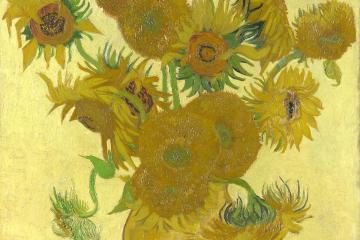
Themed around the colour yellow, as it weaves its way through, pigment, plants and painting.