

In this three-lecture Study Day RSA Fellow Marie Conte-Helm first charted the development of the Japanese aesthetic i
Study Day on Tuesday 3rd November 2026 Japanese Art and Western Encounters led by Professor Marie Conte-Helm OBE
Study Day on Tuesday 3rd November 2026 Japanese Art and Western Encounters led by Professor Marie Conte-Helm OBE
In this three-lecture Study Day RSA Fellow Marie Conte-Helm first charted the development of the Japanese aesthetic in painting, sculpture and the applied arts. She explored the impact of Zen Buddhism on Japanese culture, particularly in gardening and the tea ceremony.
"Highlights of Japanese art" introduced the day. Marie Conte-Helm looked at the Edo period and how this has come to influence the Japanese arts of today. The native Shinto religion and it's shrines had a part to play, as did the imported Buddhist religion with it's temples and sculptures. The military and imperial courts, There were borrowings from China too, such as language and calligraphy. Types of art were shown through such forms as lacquerware, kimonos, handscrolls and folding screen.
"Japanese art and the West: : from Namban to Japonaiserie" At first Japanese people were fascinated with the explorers that made it to their shores. Japan’s subsequent isolationism, when the shogun saw Christianity as a threat, and limited contact with the outside world through the Dutch trade produced a small but significant window to the West in the 17th and 18th centuries. It was the reopening of Japan to trade in the 1850s that brought Japanese artefacts into Europe, creating an explosion of interest in Japanese art and design among artists in the West, including the Impressionists and Post-Impressionists. This was two way with Japanese articles such as pottery coming into European shops. While some painters were content to paint these articles in a western way, Van Gogh got inspiration to use empty space, and referenced Japanese pictures in his paintings. Toulouse-Lautrec used a Japanese seal as a signature.
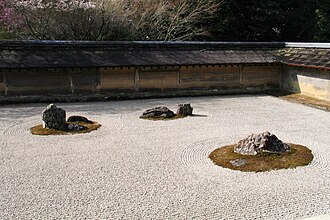
"The art of the Japanese Garden" - stones representing mountains and water for rivers and reflection are found in all types of Japanese gardens from the strolling garden to the dry garden. Bridges and lanterns are common with shades of green predominant.
Photos from the study day were not allowed to be distributed for copyright reasons, so the ones here are from Wikimedia commons

 ,
MORE FEATURES


Our members appreciated our October lecture on Rembrandt's "The Night Watch - an Anatomy of a Masterpiece", being fas

TASWG members recently enjoyed a gloriously sunny stay on Malta, learning much about the history and heritage of the